
DRAM, or Diastasis of the Rectus Abdominus Muscle, is a common phenomenon that occurs during pregnancy. As a pregnancy progresses, the mother’s abdominal skin, organs, muscle, and soft tissues have to stretch to accommodate the growing uterus and baby within it. Most prominently, the rectus abdominus muscle, or the ‘6-pack’ muscle starts to separate along the midline, known as the linea alba. The separation can be above or below the belly button and can vary in depth and length depending on the size of the mother, the size of her belly, any previous pregnancies, births or DRAMs, and what kinds of exercises the mother may be doing in the antenatal period.
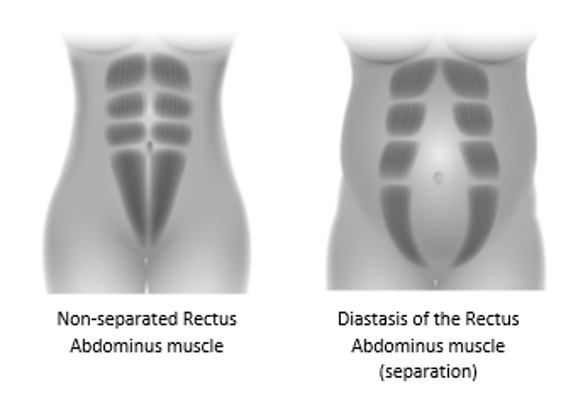
It is understood that all women who carry to full term will have some degree of separation of the abdominal muscles, however this does not always result in a persistent separation following birth. Many women don’t like the look of their belly following birth, however as the tissues recover and rebound back to their normal place, it is completely normal to have a bit less tone and a tummy that feels soft & jelly-like, particularly in the first few weeks following birth. The good news is, DRAM and reduced tone through the abdominal muscles can be rehabilitated really well and can be returned to pre-pregnancy strength under the guidance of a Women’s Health Physiotherapist. For the best rehabilitation to occur, it is important for women to avoid heavy loading of the abdominal muscles for at least 6 weeks following birth to allow the muscles to begin to rebound back to their normal position. This includes sit ups and crunches, or any exercise that causes ‘doming’ of the tummy muscles – this is where the muscles form a triangular or wedge shape down the middle of the tummy when they contract. This may also include planks or lifting of heavy loads which raise your intra-abdominal pressure. Gentle pelvic floor and abdominal contractions are ideal during this period and should not provoke pain or discomfort through the abdominal region.
Assessment of a DRAM can occur immediately following birth, including after Caesarean sections, and it is encouraged that all post-partum women have their DRAM checked by a Women’s Health Physiotherapist, particularly if they have any concerns regarding pain, doming or discomfort in their back, hips or abdominal area, or are keen to eventually return to activity at any level.
If you have any questions or want to know more about DRAM in pregnancy or have recently given birth and would like to start rehabilitation, call us or head to our website to book in with a Women’s Health Physiotherapist for an assessment.
